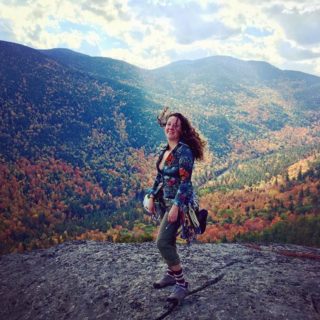
There is only one place that hasn't changed in my whole life, and I am in it. I am in the country.
My grandparents own a country house about an hour outside the city, near a lake called Lake Celeste. When I was a kid, we called it, simply, "the country." It looked like the country in books. My grandmother doesn't call it "the country." She calls it, grandly, "Celeste."
It's really not the country. It's more like an outlying suburb. It's kind of country lite. It's within earshot of some major highways, and it's not high enough in any mountains or far enough from the city for the air to taste like gaseous crack. You can hear the romantic whistling of Metro-North trains on the Hudson line and there's plenty of other civilized noise. Still, there are trees, and there is a lake--Lake Celeste.
The lake is man-made and therefore an ecological nightmare. Underwater weeds grow from the bottom and a weird algae forms on the top. Still, the water in between the weeds and the algae is cool and clear. "Like velvet," my grandmother is fond of saying. "Like velvet."
At the edges of the lake, lily pads grow with supernatural force. It's quite possible they are not normal lily pads. The Indian Point nuclear power plant is just a few miles away, lending this place an ominous touch. If Indian Point were to blow, Celeste would be in the kill zone.
West Point is also nearby. Some days, you can hear the heavy artillery firing as the cadets earn their swords and pins, preparing for their departure to foreign countries, where they will orchestrate the controlled chaos of state-sanctioned murder.
Lake Celeste, however, is an enclave apart from these grim realities. It's a respite, an idyll, a safe cluster. It's a former bungalow colony, a place where in the summer, aging Jewish women stand in the shallows wearing bathing suits with skirts. It's a place where you drag large, rusty devices across the clay tennis court between sets. This place and this house are cluttered with forgotten objects, and they are weighty with memory.
There is a plastic salad bowl full of maracas. There are lamps that would command several hundred apiece in the used furniture stores of Williamsburg, kitsch the hipsters would lap like Pabst. There are rotary phones here. I dialed my cell on one, but they are disconnected, save for 911. All outgoing calls are emergent.
There is a framed certificate thanking my grandfather for his decades of accounting service to the Lake Celeste Community Association. There is an oversized painted spoon with a tiny mariachi band inside made of wire and cloth. There are drawers full of partly melted candles and incomplete sets of poker chips and power adapters for nations long since immolated in civil conflict. There is a thigh-high stack of phone books. There are rusted fans and dead flashlights. There is a closet filled exclusively with raincoats, another filled exclusively with tennis attire circa 1981. There are seven boxes of aluminum foil.
Among the thick tomes about history, Freud and the Jews (including, but not limited to, one book called, The Jews), flanked by mouldering second-best-selling paperbacks of decades past, there is the copy of The Joy of Sex I read wide-eyed one day I stayed in from some family activity, claiming to have a cold. Illustrated in the seventies, it put in my head a permanent association between sex and unshaven armpits, sex and brown leather boots. It may be this copy of The Joy of Sex that is responsible for the conflation of the two governing desires in my life, the basic human desire to have sex and the basic stoner desire to time-travel to the seventies.
A quick revisiting of The Joy of Sex reveals that the text was written by a complete lunatic. It is as if no one expected the text to be read at all. Indeed, it took me fifteen years to read the text, now that I have seen sex in places other than between the covers of The Joy of Sex.
There is an ancient phone list of all the houses here, updated over three decades with pencil. There is a newer yellow piece of paper with the words BRENDA CALLED in scrawled pencil, followed by the words SHIRLEY GOODMAN (I CALLED). Underneath, in pen, it says:
She has lost 6" in height Jason is at Bard Peter decided he did not want to go to school anymore--he is recovering from his lapse. Edwin + Mark are OK. She is to get back to me about situation with the burial plot Margaret Marin has Alzheimer's she is in an assisted living facility
(all names have been changed to protect the lapsed)
Are these notes on a recent phone conversation or a phone message from one grandparent to the other? Or notes to assist in the relaying of a phone message? I didn't know that they were taking notes on their phone conversations now, that they are that forgetful. Still, I am encouraged. They are thorough notes, and it is a clever solution.
I've noticed that my grandparents say that people are losing their minds the way someone my age might say someone can't hold their liquor. It's understood that it's not the person's fault, but there's an element of judgment in it. It's accepted, but it's not admired.
One of my students asked adorably the other day if I could teach her enough math to enable her to build a time machine. She is in fifth grade and still curious and cute. At my tutoring jobs I observe what the hormones that send us to The Joy of Sex do to humans. They turn us into monsters. Ten-year-olds are sweet and inquisitive. Teenagers are dark and insane. There is no math to explain it, nor to build time machines. But, I am going to tell her next week, if you want to travel through time just make sure one place, one house, stays unchanged your whole life. You don't need math to build a time machine. Only, ironically, time itself.
II
Lake Celeste briefly achieved a moment of unparalleled hipness when a celebrity bought a house here. Several years ago at Passover, my grandfather gestured at the Times magazine, which had Moby on the cover that week.
"Hey, that's Moby," said my grandfather. "I know him."
"You know Moby?" I asked incredulously. "How?"
"He had a house up at Celeste."
"Moby had a house up at Celeste? That Moby? The musician?"
"Well, he's not a musician the way I understand it," my Grandpa said. "He makes music with computers. He told me all about it."
"Moby told you all about it."
"Yeah. He's a very nice guy. Though we had a terrible time getting him and his friends to stop jumping off the dock."
Moby eventually sold his house at Lake Celeste. Perhaps he realized he had bought into a bungalow colony of aging Jews within the kill zone of nuclear power plant, and he said, "Hey! I'm a multimillionaire! I can buy any country house I want!"
III
We would go up there some weekends. "Kids," my parents would say, "We're going to the country." My mom would make me lists on tiny pieces of paper so I could pack my own clothes. Before I could read she'd use pictograms. She'd write, "3" and then draw a picture of underpants. Sometimes she'd cross out "3" and write "4." "It's never a bad idea to have an extra pair of underpants," she'd say.
The road was narrow. My dad would beep the horn going around blind curves. He didn't want to, but my mom would make him. "Hunk, Carl, hunk!" she'd say. For some reason her faint but discernible New York accent causes her say "hunk" instead of "honk."
"I'm hunking, Annie, I'm hunking!" my dad would say. My parents' identical accents continue to make the dying and flawed argument for marrying within your cultural group.
The final turn led onto a dirt road. I was obsessed with the line between the paved road and the dirt road. It occurred just after Ron's Kwik Stop. I would hold my breath as we approached Ron's Kwik Stop, listening for the sound of asphalt changing into dirt. I was also a big fan of the Queens-Manhattan sign in the Midtown Tunnel. I always liked crossing lines.
When we got to the country my dad would sing, "We're here, because we're here, because we're here, because we're here." He is tone deaf and so the inflection in the song was imparted by escalating volume. When we got in the car to go home on Sunday he'd sing, "We're going ho-ome, we're going ho-ome!" I'd always fall asleep and wake up as Shea Stadium came into view. Maybe it was because my dad would read that year's team motto aloud. "Catch the rising stars!" he'd shout, or "The magic is back!" Sometimes the Met game would be on the radio, other times Springsteen. Life was simple in the mid-eighties. We hated Reagan, we loved the Mets, and one of the many hit singles from "Born in the USA" was on the radio all the time.
When we'd get back from the country our apartment in Queens would smell weird from being closed up for a few days. Not bad, just weird. I was obsessed with smelling the smell of the apartment being closed up. When we got back I would rush inside and try to get a good smelling in before the closed-up smell disappeared out the open door. While I was inside sniffing out the smell of a place without people I'd hear my parents yelling, "Who is going to help unload the car? Who is going to schlep? I don't see anyone schlepping! Come help! Come schlep!"
IV
The country house consists of a living room, dining room, kitchen, two bedrooms and a screened-in porch on one level, and then a separate bedroom downstairs accessible by an outside stairway. That room is called, "The room downstairs." It was where my parents and I would stay when I was very little, before my brother was born. My parents were actually married in the room downstairs, because it rained on the day of their wedding, and they could not be married outside by the lake like they planned. They wanted to get a tent but my grandfather said, "Trust to luck."
My grandmother would come and get me from the room downstairs early in the morning and make me Cream of Wheat. She never stirred it so it was full of chewy, undercooked lumps. I loved it that way and would nag my mom to make it lumpy, too, but she never could get as many lumps. My grandmother would wear an orange terrycloth bathrobe. My grandfather would sleep late. He'd come shuffling out of the bedroom in his slippers and blue terrycloth bathrobe, sans hearing aid and teeth.
"Sammy," my grandmother would snap, "Put your teeth in for God's sake." It was the first command of the day. Many others would follow.
After a while my parents would emerge from the room downstairs. They were always in a really good mood. It only recently occurred to me how they might have been using their private time in the room downstairs.
After breakfast, it would be time to "go around the lake." Though the house has lakefront property, around the other side of lake is the communal sandy beach, and the weeds and muck have been cleared to make a sandy bottom. There is also the tennis court where a person can "hit a few balls." My grandparents were tennis fiends and always hoped to instill in the next generation a similar love of tennis. My mom wasn't too into it and my grandmother seemed annoyed about this. "Your mother really has a very nice forehand," my grandmother would say to me often, as if this were a sad secret.
There'd be much discussion of how to dress around the lake, because around the lake the temperature would be several degrees warmer. The outdoor thermometer on the deck would be consulted, and then the discussion would ensue of how many degrees warmer it might be today around the lake. It might be as much as five to ten degrees warmer around the lake. There was also a thermometer around the lake, and my grandmother would often take readings over there and compare them.
"Yesterday, over here, seventy-eight," she'd say. "But that thermometer around the lake, do you know what it said?" She'd pause for effect.
"Eighty-five! Can you imagine? It's like a whole different climate."
Bathing suits would be put on. Tennis rackets would be liberated from their hexagonal presses, new cans of balls opened. I really liked the smell of a new can of tennis balls, but would never be allowed to open one, because the lid had a sharp edge.
Tote bags would be packed with towels and changes of clothes. My mother would remind me to bring my underwear for after I swam. Then my grandmother would remind me to bring my "panties." I tried to no avail to get her to stop using the word "panties," which I still can't hear without cringing.
What is this family obsession with having underwear? I have some insight, because one of my grandmother's charming habits is repeatedly telling traumatic stories from her childhood. During the Depression, my grandmother's family was so poor that she and each of her three sisters only had one pair of underwear, or panties, as she would say. The elastic was all worn out and it was held up with safety pins. One day in the stairwell at school the pins came undone and the panties fell off. She tried to abandon them on the stairs but all the kids screamed and laughed, "Ruthie lost her panties!"
Many survivors of the Depression have an obsession with abundance and hoarding. In my family this expresses itself through having enough underwear.
After it was confirmed that everyone had enough underwear and towels, we'd go around the lake, where when I was really little I could run around naked. Hands would periodically descend from above and slather me in sun lotion. Hunger would be staved by partially damp rice cakes. Wholesome and well-supervised outdoor aquatic fun would be had by all.
We might return to the house around lunchtime. This would invariably be a can of salmon. "Let me make you a can of salmon," my grandmother would say. "Can I make you a nice can of salmon?" She actually makes a very nice can of salmon, and tuna. So does my mother. So do I.
V
I went around the lake yesterday and attempted to take out a rowboat. The rowboat was full of rainwater and despite dragging it onto the sand and shoving with all my might, I could not overturn and empty it. This might be because the rowboat is made of industrial steel and weighs about four hundred pounds. It's the same rowboat that's been there all my life, the same one I was permitted to take out, while wearing a moldy lifejacket, after passing the "deep water test," which consisted of being thrown from the rowboat by Sid Gottfried.
Sid was in charge of administering swimming tests to the grandchildren of all the homeowners. To be allowed to progress beyond the roped-off crib, you had to prove you could survive a disaster in the middle of the lake, like your canoe overturning or an unexpected ejection from the rowboat. My grandmother always felt that Sid's tests were incomplete because they did not include the possibility of being stung by a wasp while in the rowboat. She thought you could get stung by a wasp in the rowboat, and then panic, and then knock yourself unconscious with the oar, in which case you would fall into the lake already unconscious and drown, and was Sid Gottfried preparing you for this possibility? He was not.
"Emily," my grandmother would say, even when I was still wearing an inflatable seahorse in the crib, "the water gives us life, but it can also take it away. It can take it away in an instant. In an instant. So be careful."
This was not unlike the time she told me, "The joys...of having a body...and sharing this body...with another body...the joy of two bodies...such a joy. But there are dangers that can change your life in an instant. In an instant. So be careful."
That's pretty much my grandmother in a nutshell--a hedonist with a vivid and developed sense of impending disaster. She's all sex and death, and now so, too is the country house. The Joy of Sex is still here, but so is the implication of death, in my grandparents' accumulated junk, in their likely absence from the house this coming summer, in the undecided fate of this house and all the junk inside it. Everything here is old and musty and smells of mildew, even The Joy of Sex. Only the people on its pages, frozen in eternal ecstasy, haven't aged at all.
I coughed for a month. I coughed until subway cars and restaurants emptied. I coughed until the parents of my charges came running into the room to find me doubled over, one finger aloft, wait, wait, wait. I coughed until one mother, regal, Indian, slippered and pashmina'd, came running with her two Thai maids, bearing a succession of silver trays. They gave me a shallow bowl of cough syrup, a glass of water, a mug of honey-lemon tea. "Swallow," they said. "Sip." I put the empty vessels on the trays and they carried them away.
I coughed on several occasions until a kind of incidental puke shot out of me, discreetly, into sinks and gutters all over the city. I'd given up my resistance to opiates and their side effects and chugged narco-syrup to no avail. I could puke from coughing or I could puke from cough syrup. I continued to cough and continued to puke but did it numbly, dumbly.
At night I fell into thick sleep, drifted dreamless through empty white rooms. Someone was always coughing in another room down the hall. It was me, Rebecca would tell me the next morning, coughing through the night. It was me, the neighbors told me when I saw them in the lobby, maybe I should see a doctor. I told them about the doctor, the syrup, the puking. They nodded and murmured. I apologized for the noise.
I coughed until I became religious. I went out and got drunk. The next morning Rebecca told me I'd come home spouting uncharacteristic beliefs. "You kept saying God had given you the cough to make you pay for your sins," she told me. "And then you went into your room and prayed a lot."
I coughed until something inside of me gave way. I coughed until I bruised, broke, cracked, strained, sprained, separated, dislocated or floated a rib, or pulled the muscles or cracked the cartilage in between. It was hard to tell. They all had one symptom, stabbing pain, and one treatment, control stabbing pain until healed. Do not bind ribs, do not suppress cough, do not breathe shallowly, or fluid could collect in lungs and cause pneumonia. Watch for signs of punctured lung.
I begged my parents for my father's dental-surgery Vicodin. I hoarded and nibbled at it, metering it out. The pain would ease, go from searing to stabbing to sharp to just there. The Vicodin would wear off and it would come back all at once. It was like a broken heart. I wished all broken hearts felt this way, so direct, a knife in the ribs, instead of an ether that comes and goes with different songs and skies.
While my rib ached, I imagined different things. I imagined that I was a soldier, keeping my wound a secret so as not to be separated from my men. I'd finger it privately, consider the sticky blood on my fingertips, wipe it on my fatigues. My rib was only the most pronounced discomfort in a battle-battered body. There were also my ill-fitting boots (stonily yanked from the feet of a Nazi I'd killed myself on patrol), my frostbitten fingertips and the shrapnel that remained lodged beneath the skin of my shoulder. (I'd been hit during the jump on D-Day.) I kept my suffering even from the squad medic, refusing to leave my brothers in arms.
I imagined I was some figure of heroic solitude, a survivor of a plane crash or climbing accident, hauling my injured self over mountain passes, left for dead but possessed of a will to survive. I imagined I was an athlete of Jordan-esque caliber, playing through the pain. I was bleeding through my sock, my fever was a hundred and four, after the game I'd be rushed to the hospital for intravenous hydration.
I imagined the revolution had come and I had been shot by the army we rebels were about to overthrow. The wound was fatal but I had a few minutes to live. The last thing I saw was the flag of the fallen empire burning in the street. I died happy.
I imagined I was Eve and she was first, and I was lonely and naked in a garden paradise, and the pain in my rib was God fashioning me a companion who'd spring fully-formed from the marrow near my heart, and we'd have a damn good time until he bit into that fateful fruit.
I'd been coughing for a week when I gave in and went to the doctor. As I opened the door to the office I began an operatic coughing fit. By the time I approached the reception desk, the doctor's numerous assistants were peering curiously around the glass divider. Just as I stepped up to the window the grand finale welled up from the depths of my chest and I barked out a few more notes.
"Jesus Christ," said the receptionist.
"I'm here to see the doctor," I croaked.
I waited on an outdated gray leather sofa and averted my eyes from a truly hideous piece of art, inclining my head instead toward the flatscreen television, which was showing CNN. I probably haven't seen CNN in eight years or so, not since my college housemates and I fell asleep waiting for the Bush-Gore election returns that never came. Horrible stuff, CNN. They were conveying so many kinds of horrifying information in so many ways at once that I could feel my will to live on this earth slipping away. The visuals were of some kind of natural disaster, the talking head kept repeating the word, "bomb," and the ticker on the bottom was spinning a lurid tale of violent crimes perpetrated on the young and innocent. Into this evil world I spewed more evil, one viral gust at a time.
I sat, waiting and coughing, until an elderly woman came out of the exam room. She walked right up to me and watched me cough while she put on her turban, fur hat and sunglasses.
"Do you have bronchitis?" she asked slowly. "Because I do."
"I-cough-think-cough-maybe I-cough cough do," I said.
"Well, it's just terrible, isn't it?" said the old woman, drawing her fur tightly around her shoulders.
Just then, doctor called me in to his office to take all kinds of notes on me. In giving my medical history I realized I was actually an incredibly healthy person. Everything works just great except for my lungs, which have always been prone to lengthy bouts of coughing. I had to answer a lot of probing questions, though.
"Do you smoke?"
"Ah, no. But sometimes I am in smoky rooms."
"I see. Do you drink?"
"Yes."
"Significantly?"
"Do I drink significantly?"
"Is your drinking significant?"
"Drinking is significant to me, yes."
"Do you drink in a significant way?"
"No, I would say that I drink in an insignificant way."
Satisfied, the doctor continued on. "Are you taking any drugs regularly?"
"What do mean by regularly?"
"Do you take any medications?"
"Do I take them?"
"Are you on any medications?"
"No."
The stress of having to answer all these questions brought on a coughing fit. The doctor looked at me kindly.
"That's quite a cough you've got there," he said.
"I know," I said proudly. "I'd be awfully grateful if you could give me some powerful drugs that would get rid of it."
"Well, we'll see," said the doctor. "Let's poke you and stick you and take some pictures."
He took me in the exam room and listened to my chest. "You've got a whole symphony in there," he said cheerfully. "All kinds of noises."
"Is that bad?"
"Let's take a picture."
The nurse took some x-rays and several vials of blood. I went back to the gray couch, then back into the office, where I was diagnosed with a combination of bronchitis, tracheitis and laryngitis and prescribed a narcotic cough syrup.
"You don't drive, do you?"
"Nope."
"Good, 'cause this'll knock you right out."
"Sounds great," I said. "Will it make it go away?"
The doctor frowned. "You should be feeling better in a few days, but I'll give you two refills just in case."
I took my prescription across the street to the pharmacy and collected a bottle marked "Hycodan/hydrocodone."
"Hydrocodone," I murmured. "I know that stuff."
Wikipedia revealed that the good doctor had prescribed me liquid Vicodin. Sweet! I had been really depressed from being sick and coughing all the time, not to mention the dark days of winter and the pain of being alive. Now I had a bottle of liquid Vicodin to ease the pain. It was covered in stickers. "Intensifies the effects of alcohol," they said. "May be habit-forming." "Avoid heavy machinery."
I looked it up on the internet. Side effects included: Blurred vision, constipation, dizziness, drowsiness, dry mouth, euphoria, excitement, nausea, vomiting. Most of those sounded unpleasant, but I'll risk a lot for a little euphoria and excitement. There were was nothing to look forward to among the withdrawal symptoms of feeling unwell or unhappy, anxious or irritable, dizzy, confused, or agitated and suffering from nausea, unusual skin sensations, mood swings, headache, trouble sleeping, and sweating. How would I know if I was in withdrawal or I was just myself? Maybe the unusual skin sensations would sound the appropriate warning.
It seemed I was about to embark on my own little flirtation with opiate addiction. Never been much for that particular flavor of fucked-up myself--I very often do vomit or become drowsy, not my favorite sensations. I much prefer the delusion that I can see the essence of all things or I am a dictator to I am drowsy and will soon vomit. However, compared to round the clock convulsive coughing, euphoria followed by drowsiness followed by hopefully not vomiting sounded appealing.
My first day on the stuff was great. I couldn't tell if I was no longer coughing or was now too drugged to care, but it didn't matter because I fell asleep before I could really think about it. The next day I had to work for many hours and hesitated to take the soporific narco-syrup lest it render me useless. But after coughing into the echochamber ceiling of the public library where I meet my first two students and drawing glares from all the geriatric library regulars, I ducked into the vestibule and swigged. I quieted down somewhat and went on with the day. I couldn't help but notice that with my midday nip of narco-syrup came an instantaneous feeling of relief and a soothing--if somewhat artificial--sense that everything was just fine right now, and always would be.
Two hours later, it was raining. It was cold. I was coughing. I was sleepy. I was not so much euphoric, or even excited. Perhaps I was already developing a tolerance and no high would be like the first. I made it to the final townhouse of the evening and starting coughing in earnest. I had reserved the last dose for this very eventuality and down the hatch it went in a torrent of Red #3, deforming future babies, breeding future cancer, but hopefully suppressing, for the moment, my dreaded cough.
By some miracle, the last student of the day had improved her SAT scores by 100 points in each section, despite my cancelling our last two sessions due to convalescence. This demoralized me. They were better off without me. I wasn't even good at my day job. But before I could get too upset, I felt the familiar tug of the opiates gently removing these worries from my mind, the way you would extract an object from a sleeping child's fingers. That was the real trick of the whole hydrocodone family, I remembered. Not the brief euphoria but the slow, almost imperceptible removal of pain. Funny drug, those painkillers--more about what they absent rather than what they add.
"How'd you do it?" I smiled sweetly at my student.
"I just tried," she scowled.
"Well, that's good," I said. "Try when you take the real test and you'll really be on to something."
I noticed that it was a lot easier to deal with moody teenagers from within a pleasant opiate haze, though it was harder to stay awake. I assigned the kid some problems to do and asked her mom for some green tea so I didn't nod out on her dining room table. The hydrocodone was reaching some critical mass in my body. I was beginning to drift away on a syrupy red sea.
And then, just like that, the sea grew angry. My boat began listing, then tossing in the waves. I felt a familiar and telltale burning between my ribs, the stirrings of violent nausea.
Despite my demented escapades, I've never thrown up in a client's house, and this is the shred of dignity I cling to when I'm looking for reassurance that I'm only a recreational moron. How ironic that the substance currently endangering my untarnished record was the one drug I'd ever actually been prescribed.
"I'm really sick." I told the kid. "Tell your mom we're done." I quickly calculated a ten-minute refund and counted out the exact change. I called a taxi and waited by the door.
"I'm so sorry you're not feeling well," said the mom. "While I have you, do you think she should do a summer internship?"
The very words, "summer internship" almost yanked my stomach inside out. I've always found the custom of monied youth working for free while following around middle-aged people in suits in preparation for their own long slogs up the corporate ladder to be nauseating on many levels, but I took a deep breath and said, "A summer internship, yes, that could be good. A summer internship, yes. I highly recommend it."
The cab arrived and I concentrated on not vomiting in it. This was difficult, as it was suffused with the scent of a thousand air fresheners. Coupled with the usual swerving and heavy braking, the sharp odor contributed to the delusion that I was starring in my own private reality show called, "Who Wants to Throw the Fuck Up Right Now?"
I called someone who could help with this terrible problem. I called my mommy. "Deep breaths," she said. "Deep breaths."
I got to my corner and paid the man whose addiction to air fresheners was far worse than my burgeoning dependence on narcotic cough syrup. I stepped out of the taxi and promptly projectile-vomited all over the tree outside my apartment building. It wasn't the first time that had happened, but it was the first time it was neon yellow. Hydrocodone, I read online, metabolizes into morphine in the body. Apparently, Red #3 turns into Yellow #5.
I trudged inside and flung myself onto the couch, where Rebecca kindly brought me tea and toast.
"It turned on me!" I moaned. "My narco-syrup turned on me! It was prescription!"
"Did you take the amount you were supposed to?" Rebecca asked suspiciously.
"I did! I swear!"
"Well, you're just going to have to take less of it."
"But I want to take more of it!"
"I know you do, buddy," said my kind friend. "I know you do."
I went to bed that night without any liquid Vicodin syrup and coughed through the whole night. When I woke up I realized I'd pulled something in my neck, coughing in my sleep. A nice dose of painkilling hydrocodone would have helped with that, but I was too afraid to take it. New York has so comparatively few plants and trees and it wouldn't be fair to cover them all with neon yellow vomit.
Soon, at least, there was a distraction. My personal physician called to announce that she'd gotten engaged. I screamed appropriately and then wept a little for good measure. It was nice to feel another emotion enter my world of uncontrollable coughing and self-sedation. Joy! Celebration! The embarking upon of a future by two young people in love! Most important, the chance to get wasted on a beach and make some bad decisions!
I called Rebecca to share the news that our personal physician was engaged. "She and I are really not having the same kind of week," I remarked.
"No," Rebecca agreed. "You're not getting married. You threw up on the tree."
It is not given to everyone to take a bath in the multitude; to enjoy the crowd is an art . . . That man who can easily wed the crowd knows a feverish enjoyment which will be eternally denied to the egoist, shut up like a trunk, and to the lazy man, imprisoned like a mollusc. The poet adopts as his own all the professions, all the joy and all the miseries with which circumstance confronts him. What men call love is very meagre, very restricted and very feeble, compared to this ineffable orgy, to this holy prostitution of the soul that abandons itself entirely, poetry and charity included, to the unexpected arrival, to the passing stranger.
-Baudelaire, "Les Foules" ("Crowds")
I
The platform was crowded, the crush was increasing. There was some kind of delay, but it hadn't been acknowledged, and when the train came wheezing into the station at half speed, the crowd surged. The train was already packed, save for one nearly empty car.
In the summer you know that it's a hot car, no A/C. My dad taught me that, riding the Long Island Rail Road together. "Hot car, hot car, hot car," he'd mutter, and herd me with his shirtsleeved arms, papa duck-like, into the crowd already thick at the door of the next car. He'd nudge me down the aisles, quacking, "not-near-the-bathroom, not-near-the-bathroom," till we settled in our seats under the blasting vents and smoothed our feathers.
But when you see the empty car in winter you hope somehow the other thousand people on the train just didn't notice it. Maybe somewhere downtown part of the platform was blocked off. Maybe a giant church group just emptied out at the last stop. Maybe the people inside were inflatable and just deflated.
No such luck. In the middle of the car was a splatter of fresh vomit, covering a wide radius. A comical splatter, like a logo on Nickelodean. I thought of that show where slime fell on people, orange goop, proto-reality TV. Vile liquids pouring from above the shape of things to come.
Some people shrugged and sat down at the edges. It's cold and flu season, maybe they couldn't even smell it. Not me. I battled against the crowd, back to the platform. I didn't want to ride with the vomit. I have limits.
II
Again, the empty car on the overcrowded train, but not as empty. I had forgotten about the vomit. I got on. It smelled like a horse paddock, minus the hay. I sensed a general avoidance of a certain area of the car. Looking around, I couldn't place it. The car was a refuge of the insane and deformed. Babblers, droolers, mutterers, the morbidly obese and the absolute wrinkliest human being I'd ever seen. Religious ideas about foot-washing skittered through my mind. Whose feet would I wash first, if I were as kind as Jesus? In this car, Jesus wouldn't know who to pick.
Then I saw him. A bum, a hobo really. A derelict right out of portraiture. Silvery stubble, crumpled hat. And on the floor beneath him, a puddle of his own animal-smelling urine. He sat right in it with his hobo dignity, nodding out drunk but sitting up straight.
III
Rafi makes his rounds, selling his papers. I've seen him for years, first on the F, then on the L. He always says the same thing. "Selling papers isn't the best job in the world but it's an honest living. All I have to look forward to tonight is a hot meal and a place to sleep. If I don't sell these papers I don't eat tonight, so ladies and gentlemen if you can find it in your heart to give me some money, I would be very grateful. I hope you get home safely tonight and God bless you."
From the marks on his arms and the boniness of his body, I think what Rafi looks forward to at night is shooting up, but who am I to judge? I give him money, only sometimes. Everyone gets a personal compliment, very heartfelt. I always get "beautiful eyes," even when I'm wearing sunglasses.
Usually he picks his way nimbly through the car, talking all the time. "Thank you, beautiful," "God bless you, my friend," "Excuse me sir," "Excuse me, miss," "Beautiful smile, mami." In the dozens of times I've heard Rafi do his schtick I don't think I've heard him say anything he hasn't said a thousand times before.
Tonight, though, he stops in front of a young woman a few seats away from me.
"I don't like ugly people," he tells her. "Ugly people are angry at everyone. Always in a bad mood."
She doesn't respond, but kind of half-nods, half-smiles, the way you do.
"Tonight, after I'm done here, I'm gonna go to JFK. I'm gonna get on a plane. I've got a ticket and I'm gonna fly away from here, to my own apartment, and when I get there, I'm gonna do whatever I want!"
"All right," says the girl.
Rafi hitches up his pants triumphantly, flashes his broken grin, looks over his shoulder in that rodential way of the addicts of blissing drugs both fairly innocuous and slowly ruinous and leaps into the next car.
IV
A shameful thing that happened involving begging:
One night I was running late, came bursting up the stairs at 6th Avenue and 14th full speed. I kicked over the McDonald's cup of an elderly beggar working the corner silently, sitting in meditation on a milk crate. His change scattered all over the street. It was dark, it was cold. I looked at down all the coins, then up at the clock on the bank, and rather than help him pick up the change I threw a five-dollar bill in the empty cup and ran on. The few minutes it would have taken to gather his day's work were hardly worth it to me, monetarily speaking. Cruel world.
V
A couple, so in love. There are many couples in love on the trains, but this couple is so in love. They have their arms around each other and they are talking and laughing and kissing. She lays her head on his shoulder and closes her eyes, he strokes her fingers, and then, just as lovingly, the part of her purse they're resting on. I am reminded of that part of Franny and Zooey where the guy Franny's making out with kisses the collar of her coat because he can't differentiate between the girl he loves and the things she owns. The girl opens her eyes and they kiss and start talking again. Everything they say leads them to laugh or kiss softly. It's not showy or gross or annoying, just beautiful.
VI
Rush hour, and I am trying not to panic. Maybe it's some kind of reptilian-brain past-life Jew thing, but I really don't like being smushed into train cars. It's different than a mosh pit--more brutal somehow. Despite the trancelike state of people under the spell of music, despite the aggressive release of a violent and sexual energy, despite the palpable smell of hormones, the mosh pit is more orderly than this. It surges this way and that, like seaweed in an invisible tide. If you fall you are caught. If you go limp you are carried along. If you spread your feet and stand firm you are (marginally) safe. Everyone is looking in the same direction, moving to the same music.
The subway is not like that. It's not a tide. It's more like peristalsis, gorging and disgorging, swallowing up and spitting out. But in rush hour it's always bloated, and the eyes of its human food are empty. In the mosh pit if I am crushed it is by the writhing, flinging bodies of the ecstatic. If I am kicked or printed with a slick of someone else's sweat it is the transfer of a wild energy. Here the woolen coats and nylon bags press tighter and tighter, with no hope of a downbeat to send them in another direction. Such a joyless and grudging group hug.
I turn my iPod up, up, up and dance minutely in my non-place on the train, imagining the dead-eyed commuters to be a mosh pit instead. Miraculously, the seat in front of me opens up, and the tightening plunge at the next stop forces me into it. Next to me is a woman my age and she, I can see, is really on the brink of panic. "One more stop," she breathes quietly. "One more stop."
The crowd spits a little boy practically into my lap. He's small, four or five, and his chin rests on top of my bag, which rests on my knees. His curious face occupies the space the New Yorker would, if there were room to extract it and open it, which there is not.
"Hey," I say to the kid.
"P!" he shouts, pointing above my head. "P! P!"
I twist my neck slowly to look at the advertisement. There is no "P" in it, but I want to be encouraging.
"Yes!" I say. " 'P' is one of the letters!"
"P!" he shouts again.
"P!" I reply.
It's quiet for a minute.
"What's dat?" He's pulling my sunglasses.
"These are sunglasses," I tell him.
He puts them on. They cover his whole head. He looks like a tiny jazz musician. He preens, swiveling his head back and forth, up at his mom. He takes them off and puts them back on my face, then starts poking at his own reflection.
"Hey!" he says. "Hey, hey, hey, hey!"
"That's you," I say. "Do you see?"
"Don't touch the lenses," sighs the mom from above, so far above. Even seated, I am not down quite at his level, but I see how disparate are the kid and adult worlds. Kids live in the undergrowth. The adults are the forest canopy, looming.
The kid stops poking and makes funny faces at his reflection in my shades. We get to my stop and I burrow through the crowd in a crouch to get off the train. I suck in a giant breath of stale, subway platform air. I try to see if the kid's tired mom got my seat, but the train is too packed and as it trundles north all I make out is the strange geometry of reluctantly tangled limbs.
Interesting weekend around these parts, more excitement than we've had in a while. Went to see the show and gave myself up to the pit. I've come to believe that the sweat of teenagers is a fountain of youth, and if I bathe in it I'll never grow old. As I hoisted myself on the shoulders of my neighbors the better to see what I was hearing, one of the kids linked his hands and offered me a step up. For the first time in my overaged mosh pit career, I (briefly) crowd surfed. An excellent feeling, being passed from hand to sweaty hand, and much gentler than I expected, like a massage from an octopus. After a decent interval I was kindly set down on the floor and promptly kicked in the head. The mob giveth, the mob taketh away.
After the show I went out and drank, and when I woke up thinking, "I've been kicked in the head," I assumed it was that first, apt metaphorical encounter with my hangover and not an actual statement of facts. But the bathroom mirror revealed that I really had been kicked in the head, bruise and bump to match my headache and disorientation. The rest of the day--what little of it there was, I'd slept until three--was spent alternately in maniacal laughter and a strange clarity of mind. It really is true. All you need is a good kick in the head.
There was a party and I went, a lovely party, people I know only peripherally, and so I was something of a spectator. It was other people keeping their cool, holding their liquor, casting sidelong glances, other people drunkenly hugging, "hey!" "hey!" "heeeeeey!" while I watched, curled on the couch, sipping my spiked cider, making polite conversation, explaining any awkward pauses away with the words, "Oh, don't mind me, I've been kicked in the head."
I went home at a reasonable hour and got into bed, the right way this time. I'd passed out the previous night facing the wrong way, in the middle of trying to read Rebecca this one passage from This Side of Paradise I've been trying to read her for weeks. Apparently she escaped as soon as I lost consciousness because I woke up hours later with all the lights on, facing the foot of the bed with the book splayed on my face, briefly unable to gain traction as I was still wearing my satin robe and lying atop my silk blanket. I'd never encountered this problem before, as I usually enter the cotton-sheeted layer of the bed in the higher-friction nude, and was in no condition to solve it drunk. When I woke up again the next afternoon the slippery things were in a terrible tangle and I was not well rested. Saturday night I went to bed pleased with myself that I'd gotten in with my head at the head and my feet at the foot, only mildly troubled by the thought that maybe I was lowering my expectations of myself.
I'd left Rebecca at the party with her first pot cookie in her belly. (She's allergic to wheat and dope dealers are only just starting to accommodate this underdiagnosed allergy.) I didn't see her for almost twenty-four hours, when she returned to report that unfortunately she'd had one of those demonic trips where you go insanely paranoid. She got so paranoid, in fact, that she thought she was already dead. I was momentarily jealous when I realized she'd lived the plot of No Exit and come back to tell the tale, but soon came to my senses and felt a deep empathy for her ordeal.
It now being not only Sunday but Superbowl Sunday, my personal physician arrived for our scheduled Fuck The Superbowl extravaganza. We opened a nice bottle of wine and immediately decided that the only way to say Fuck The Superbowl with the eloquence and finality it demanded of us would be to eat the rest of the mushrooms I had in the freezer. Rebecca was only 90% convinced she wasn't dead, so she couldn't eat any, but my personal physician and I were pretty sure we were alive and that this would be much more exciting than watching other people on other drugs beat each other up.
In no time at all we were engaged in another successful time-travel venture. My personal physician and I have always specialized in using controlled substances to break the space-time continuum and if anything we're getting better at it all the time. With a single record album we entered that most psychedelic of decades and learned many things about it. I later tested the veracity of this voyage by relating our experience to an actual inhabitant of the decade and she confirmed that we had been there.
After the album was over I was trying to read my personal physician the passage Lester Bangs wrote about it (generally I'm against secondary sources but that was my point, Bangs wasn't secondary), but she was too busy applying more and more eyeshadow, a cosmetic product she'd just discovered, and wouldn't listen, and I soon discovered the glories of upholstery. I realized no one really wanted to hear me read aloud these various passages I'd underlined and I should give up and be glad that I had mushrooms in my freezer that could make my bones glow. Words were poor substitutes for experiences! Maybe I should set fire to my computer and cease to speak! Maybe we should go eat some oysters!
I knew just where to get some.
Williamsburg was quiet, stilled by the promise of previously unseen and very expensive advertising. Everyone was inside, watching. All the streets and all the oysters would be ours!
We walked around the neighborhood, watching people watch the Superbowl. We stood outside their windows, in their shrubs and garbage areas, peering at their flat-screens. In one house, everyone held a Mac on his lap and texted wildly with one hand, the illusion of sociability maintained by a rough semicircle around the screen. There was a baby in another house, the only person in the room not transfixed by the gigantic television. The baby looked right at us with its big blue baby eyes and we took off running down the empty street.
We circulated around the pillars of the Williamsburg Bridge, looking for an uninhabited and wind-sheltered block to smoke our joint before we devoured the treats of the sea. Security guards at sites by the river called out from their posts, "Why aren't you watching the Superbowl?" Their plaintive calls and secure guarding chased us under the bridge itself, where we could light and smoke our joint in relative peace while the elevated train rumbled overhead.
Outside were feats of engineering. Inside was fine dining, plentiful tables, idle staff and a uniformly British clientele, all benefits of ignoring a national sports watching holiday. Our oysters arrived, nestled in their ice.
"It's Superbowl Sunday," I said to my personal physician.
"So they say," she sniffed, and we lifted the shells to slurp at the still living meat of the sea.
TP Health Ltd Pacific Highway Ballina NSW 2478 AUSTRALIA
January 20, 2008
Dear Thursday Plantation:
I am a frequent chewer of your Tea Tree Australian Chewing Sticks and carry a box with me at all times. Recently I removed a box from my pocket and opened it to find half the sticks missing and in their place a partially smoked marijuana cigarette. This is the third or fortieth time this has happened and I can no longer remain silent about this recurring problem.
As this correspondence will be conducted between the distant locales of America and Australia I will save us both some time and postage by addressing your obvious response to my concerns in advance. If you were planning to suggest that I was lucky enough to receive one of your special gift-prize boxes of toothpicks that comes with its own Doobie Fairy, think again, you friends of the kangaroo. To this I say, even if there is a Doobie Fairy, who smoked the better part of the doobie, and why haven't I heard of this promotion before? I will not be misled by your clever Australian slang or aboriginal dot paintings. Don't try to blame this on the Doobie Fairy or some other Australian myth when you and I both know full well that you are attempting to increase your profit margin by selling half-full boxes of Australian Chewing Sticks and taking up the empty space with useless roaches.
The price sticker on the box indicates that I paid $2.49 retail for these toothpicks. Please either
a) refund one-half of my $2.49 retail, plus cost of postage for this letter or b) post me a replacement half-box of toothpicks and the rest of the doobie at once.
I demand restitution and look forward to this situation being rectified and my good faith as your customer restored. Thank you for your prompt attention to this matter.
Yours, SuperLefty
Thorlo Sock Company 2210 Newton Drive Statesville, NC 28677
January 20, 2008
Dear Thorlo Sock Company,
For some time I have been using your footwear products to the exclusion of all others. Depending on the season and activity, I wear a pair of your either Walking, Running, Snowboarding, Light Hiking, Trekking, Western or Combat Boot socks for women in size 9-11 at all times. I have come to trust your company to ensure my superior foot comfort and health under a variety of conditions.
However, lately it has come to my attention that while wearing Thorlo socks I sometimes have negative thoughts and even feelings of acute despair. At times I feel anxious, hopeless, alienated and nihilistic. I experience self-doubt, loneliness, bitterness, cynicism and paranoia. There are periods of darkness during which I come to believe I'm wasting my life, that I'm no good and will never amount to anything and all my most cherished ambitions were ridiculous flights of fancy. I falter in my most deeply held beliefs and on very rare occasions am unable to take pleasure in a beautiful sunset, the laughter of small children or the flight of a solitary bird across the gray winter sky.
In addition, I have had many romantic misadventures that have left me with deep wounds in my raw and fragile heart from which my only relief can be found in the consumption of alcohol and drugs. The consumption of alcohol and drugs has hastened the occurrence of further romantic misadventures, creating a vicious cycle many of the best doctors and poets say is incurable.
If there is any common thread between all of these experiences, it is Thorlo socks. I am wearing Thorlo socks when all of these things happen. In the summertime I wear no socks at all and am further pained to report that these problems I've mentioned abate somewhat. In the summertime, when I am not wearing Thorlo socks, life just seems a little easier, the world a little less cold and the days a little bit brighter.
I am therefore left with no choice but to conclude that the Thorlo Sock Company is responsible for these problems. I demand compensation in the amount of my Thorlo sock wardrobe, plus damages and other expenses incurred as a result of wearing these socks. According to my accountant, $158,464.38 should cover it. I would prefer to receive this restitution in cash, though I will accept a personal check.
If I can be of any help to you as you develop socks that don't cause so much suffering, please do let me know. My time is limited and valuable, but I would be happy to spend an afternoon at your research facility in whatever capacity I can be of service.
Yours, SuperLefty
Motorola, Inc. Global Headquarters 1303 East Algonquin Road Schaumburg, Illinois 60196 USA
January 20, 2008
Dear Motorola,
In June 2006 I purchased a SLVR L6 cellular telephone from your company and have been using it with an AT & T National Service plan ever since.
During this time, the Motorola SLVR L6 has not rung to tell me that I've secured a book deal, a writing residency, a literary agent or even a nominal grant. It has not rung with any invitations to travel by private jet to a private island for a pig roast on the beach, nor to spend the afternoon drinking champagne in a rowboat. It has not rung to tell me of a large inheritance I am soon to receive from an unknown and aged relative who died peacefully in his sleep that will eliminate the indignity of my day job. My Motorola SLVR L6 has never conveyed to me news of cures for cancer or the common cold or pimples or menstrual cramps or broken hearts or myopia, not even once. Nor have I picked up my Motorola SLVR L6 to hear, "Holy fucking shit! The American empire is over and a new world order has begun and YOU are in charge! It's on CNN! " Nor did I ever, as was pictured in your advertising campaign, wear my Motorola SLVR L6 as a stylish earring.
It has, however, rung to tell me that my family dog was dying, which was a real fucking bummer, man.
I would like a refund and also a new telephone that will ring with some better news.
There we sat in the fourth-floor waiting room of Columbia Presbytarian, my grandmother, mother and I, the matrolineal straight shot. Three women who somehow branch from my grandfather's staunch maleness of shorts, of swim trunks, of overcoats and hats, one for tennis, one for winter, caps for every season in between. Not represented are Nettie (his long-dead but long-lifed mother; she lived to ninety-two or three as I recall, long enough for me to yell into her deaf ears and wave into her blind eyes; they told me later she was insane, certifiable), Shirley (sister, estranged like so many siblings of that generation, grievances of tenements and Depression childhoods now fossilized into rocky decades of silence) and Julia (other granddaughter, tenth grade, Westchester County).
I am pleased by the symmetry on this side of the family. My grandparents had two children, a boy and girl, and each of them had two children, a boy and a girl, and my grandfather himself was one of two children, a boy and a girl. And so he's had one of everything, mother, father, sister, wife, daughter, son, everything but brothers (none) and granddaughters and grandsons, which according to the mathematics of families are supposed to increase geometrically, through fruitful multiplication. Though technically with our symmetrical but dysfunctional family we are not multiplying the human race. The Diamond clan is holding exactly steady at zero population growth. All this symmetry is what they call replacement.
I am running the numbers silently in the waiting room in a kind of homage to the family business. My father went into business with this grandpa, his father-in-law. Their accounting success is sending the grandchildren one by one to the most expensive private universities, kept us all in suburban homes and horizon-expanding summer programs, ballet shoes and shin guards, tennis rackets and well-tuned pianos, even drum sets and darkrooms, if we wanted them. Their accounting success bequeathed to me the twin autisms of neatness and counting, a compulsive habit of accounting for everything and putting it in its rightful place. I played in their offices, very young, sharpening pencils, drawing on ledger paper, pressing buttons on the adding machine, Xeroxing my hands. Years later both my father and grandfather showed me the manila folders of all my hand Xeroxes they kept in their file drawers, dutifully gathered with the other records, and this might be why I think you can go to the files and find proof that you are loved. Now I count the most ridiculous things, I count hallucingenic trips (five out of eight were good, for a good trip percentage of 62.5%) I count the average age differentials among the couples I know, international flights and domestic flights, the percentage of my wardrobe that is black, the percentage of my t-shirts that say M*A*S*H. On trips and vacations I split the days into fractions, the trip is 1/4 over, this is the midpoint of the second half. Now is the year that my mother is exactly twice as old as me, and in three months there will be twenty months left to my twenties, and there are an equal number of avenues as streets left in my walk, so I can turn on every corner and make a perfect zigzag.
My grandfather, our patriarch, the original accountant, he is a little autistic himself. Not really, not technically, but he, too, likes arcane facts. He would applaud these calculations, if he knew about them, but he cannot.
Our patriarch is at this moment numbed, sedated, probably unconscious (it was explained that they'd start with a local, but if the surgery ran long, give him a general) while they unblock the artery in his groin, the very loin from which this family for whom he accounted springs. How can it be that three weeks shy of his 89th birthday they can cut him open and he'll heal, knit back together, close up?
His two personal mottoes are "Muddle through," and "Stay the course," that's how. Put those together, read the Times, take a nap, go deaf enough to mute your wife and the decades pile up.
Though his has not been an easy longevity. Medical science has played its role. Scrapings and replacings of veins and arteries have helped him along, bulges and clots suctioned before they explode, clogged vessels snipped before they fill up completely. Cataract surgery and hearing aids, medications at every meal. He's diabetic and mad for sweets. He orders Coca-Colas and dishes of ice cream, muttering, "It's quality of life, not quantity!" He goes under the knife now and then, and after it's done he whispers to me, "I have an enemy, Emily! An enemy! The man who cut me, with a knife. I will get revenge!"
He's been making a tour of area hospitals lately. A fall in the street sent him to Lenox Hill with a subdural hematoma, then he got pneumonia and ended up in the Mount Sinai ICU. It all sounded grave, brain injury, ICU, pneumonia, his age. But the hematoma cleared up on its own, and the pneumonia went away. When I went to see him he was lying with three days growth of silvery beard, looking hale and manly. He was singing dirty limericks to the indifferent nursing staff and my mother, all-but-dissertation on her psychology doctorate said, "He's disinhibited." His ever-present wingtips--even in summer, dress shoes everywhere but the tennis court--awaited him at the foot of the bed.
My grandparents both told tales of incontinent indignities, and I nodded, made sympathetic noises, blanched at the hospital smell and thought, "No thank you, not me, when the time comes, God-I-don't-believe-in give me the courage to get the gun, to make the jump, I won't go down with the leaking ship of my body, in the ward on the 14th floor, in the pavilion named for some other rich, dead Jew."
They stopped the leaks, the wetting of the lungs, the wetting of the bed, and the organs of the old reluctant soldier reluctantly soldiered on. He put on his wingtips and went home, and at Thanksgiving he was wearing one of his beautiful blazers from Barney's, the one they always proudly tell us cost several thousand dollars. "Three thousand dollars at Barney's," they whisper, in the same voice they use to say, "Harvard," also "cancer," and now, "Alzheimer's." It's cashmere, it's houndstooth, it's gray and blue and brown.
My brother's girlfriend, her first extended gathering, we found her in the corner with him, politely listening. "And THEN," he was saying, "I was shipped overseas." World War II! He'd probably started at birth! Poland, Paris, Ellis Island, Lower East Side, Arthur Avenue, Townshend Harris, handball championship, the ladies' belt factory, City College, accounting, conscription, basic training, the South, the Midwest, the 53rd Finance, the Allied Advance! We'd left her there too long. In the car on the way home, exhausted, she lay her head on my brother's shoulder, fell asleep. Before she conked out she said, "'The sweep of history,' he just kept saying, 'the sweep of history.'"
Today at the hospital, I can't stay very long. I won't be there when he wakes up. I have work. And I'm terrified of hospitals, they make me sick, they make me suicidal. The smell, the light, the chairs, the televisions blaring in the corner of every room, the different ways people try to look brave in the face of everything that's going on here. The fact that every time I've been in one someone I love has been all fucked up, and then sometimes they die to boot. Most of all I hate the mauve or beige plastic dishes, so ugly, so unsanitary looking. The way everyone is in defeated clothing, the patients in their gowns, the doctors in their scrubs, the visitors in sweatpants. In the hospital I am often seized with the urge to retch and dry heave, and then I feel guilty because the hospital to me is this idea, the hospital to me is bad fashion, and I can call the elevator, hand in my visitor's pass, take a squirt of free instant hand sanitizer and be gone.
So I kiss my grandmother and mother, and wait for a while, and then I go, because it's been several hours and will be several more, and I have work, and I am weak, and I am immature, and I don't want to stay and I don't have to.
I can't get out of there fast enough, I'm running for the automatic doors, through the atrium of the Rich Dead Jew Pavilion, toward the South Entrance, the echo in the vast space contributing to the illusion that I am underwater, kicking madly for the surface.
The day is gunmetal gray but it's beautiful to me, and I dash past the wheelchair lineup of people going home, clutching stuffed animals, trailing balloons, looking sort of demented from whatever they did to them in there to keep them alive, and I take the steps three at a time, and I sprint for the subway, and it's all I can do not to whoop, not to holler, not to yell and gloat, "NOT ME! NOT TODAY!" My hands are tight fists and I want to fall to my knees and press them to my forehead like the annual winners of the most important tennis tournaments. We'd watch them at my grandparents' country house, a bungalow, really, Wimbledon in July and the U.S. Open in the sluggish, stifling end-of-summer heat. McEnroe, Connors, Navratilova, Lendl, Graf, Sampras, Seles, Becker, Edberg, Agassi, every year one of them would win, sink to the grass or hardcourt in joyous disbelief.
And come to think of it that's what I feel now. Where they felt the relief of triumph I feel the triumph of relief. There is no Center Court and there is no silver cup, and I am not climbing through the stands and kissing my tearful beloved, bear-hugging my stone-faced coach, but I have won, I am a champion.
We'd watch the semifinals and finals on the old, remoteless T.V. My grandmother would shout along with the guttural effort of every groundstroke, and my grandfather would cheer each great point. Him in his tennis whites, her in her garish bathing suits, goggles in hand. "He's tired," she'd murmur. "Look at his shirt." The tennis greats of the moment would be soaked with sweat, their shirts transparent, their pockets full of balls. But then they'd wipe their eyes and bounce the flourescent fuzzy green thing three times, hard, pull the racket arm back like they were drawing a bow. It's my favorite shape in all of sports, the setting of the serve in motion. Tossing arm outstretched, head thrown back, swinging for your own meatball pitch. The long, silent second before the shot. Then the cries that followed, first the server on T.V., the inhuman grunt of applying the annually accelerating force, clocking in at 110, 112, 120 mph, then the linesman, always incomprehensible, the one-syllable calls "out," "fault" and "ace" indistinguishable to me, and unaccompanied by the gestures of baseball umps or football refs, and so I'd wait for my grandmother's call, high-pitched, triumphant. "Ace!" she say. "Did you see that, Sammy? Did you see?"
"He's got quite a serve, that Sampras."
We watched some epic battles. Connors, he made an improbable run one summer. I don't think he won, but he went far, and was too old. I was older, too, I remembered him dimly, young, in his prime, from when I was very little, and I was confused. I wasn't that much older but here he was, hanging on for dear life, fighting for every point, so genuinely thrilled each time he won one. And Sampras, once, he had the flu, threw up in the locker room, threw up on the court, and won. We'd watch the trophy presentation, the comically big checks. I'd beg them to leave it on until the very end, until the Goodyear Blimp pulled back to show the Unisphere, fountains aglow. If it had been a long match it would be twilight, and they'd show a montage of the last two weeks, and say goodbye for the last time, fading out on the winner, holding his trophy aloft.
As I flee the hospital I find that like all winners, I am horny. Not purely for sex, though that's part of it, but horny for everything, to run and jump and lie down on hard floors, scream and shout, to smoke cigarettes, to make remarks. I want to get drunk and give birth at the same time, I want to screech tires, I want to kick someone in the shins and get punched in the face, I want to chew steak, I want to suck face, bite a lip, taste blood. Smash glass, chop wood, throw stones, to do everything and anything my body might permit. It's a reactionary horniness not uncommon to my exits from hospitals, funeral homes and the closed-up apartments of the elderly or depressed. It's the surge of powering back on, the rarity of feeling my youth, what it means, which is really just the possibility of doing things.
How awful, I think, while one of our own lies in suspended in artificial death, his very wiring and plumbing subject to the surgeon's mechanical touch, the oldest living highways of our bloodline cauterized and still smoking, and I am thinking of sex and life and vice. How awful, I think, how wonderful.
If the family is an organism and part of me lies artificially paralyzed and splayed on a table in the O.R., then this other part is restless from the extra energy that flows in only one direction, down the line; for the straight shot, well, it's not mothers or daughters or the winning backhands of champions, the straight shot, it's time.
One of my more difficult kids today, champion eye-roller, adenoidal whiner, one who feels the indignity of being sixteen more acutely than most and takes it out on me. Probably doesn't even need a tutor, seems to pick up a decent understanding of the material from class, but highly unmotivated, vulnerable to that oldest of parental ruminations, not working up to her potential. Just getting by.
Once I showed up early and a truly beautiful boy came swaggering down the stairs, sized me up, slowly said, "You the math tutor?" and I think I may have blushed. He slipped out the door and she glared at me and I didn't blame her. "Sorry," I whispered. "You don't have to work up to your potential. Working up to your potential is what people who don't have sex in high school do to distract themselves."
Today, anyway, she had some homework, difficult stuff, exponential equations. You need to use logarithms to solve them, something I never quite understood and actually learn anew every time I try to teach them. Then I get overly excited, telling the kids, "It's not the opposite of an exponential function, it's the inverse! That's it! Yes!" Telling the kids, "MIND YOUR LOG RULES," and they stare blankly, and I sigh and ask for paper, and they sigh and rip it out, and I sigh and ask them how they're going to keep it in their notebooks if it's ripped, and they sigh and open the rings on their binders, and then I write LOG RULES at the top of the paper, I write log MN = log M + log N, I write log M/N = log m - log N, I write log a^b = b log a, I point at the paper, I bang on the paper with my fist, I say, "THESE ARE THE RULES OF LOGS," and they say, "Okay, okay," and I say, "WHAT ARE THE RULES OF LOGS?" and they point at the paper and say, "These are!" I say, "Isn't that thrilling? Aren't you glad to be alive?" And they roll their eyes, and I say, "Okay, it's not thrilling, it's horrible, and the truth is you should drop out and run away from home. Take to the road! Take to the streets! Be bold! Be brave! Live freely!" And they say, "I don't want to," and I say, "Then LEARN the RULES OF LOGS like the coward you are!"
"What's this even FOR?" whined Tuesday 6:30 adenoidally.
"These are exponential equations," I said. "They're actually kind of useful. You can use them to calculate population growth, or the decay of radioactive elements or drugs. Like medications, caffeine, and, ah, illegal drugs as well, they all degrade in the body according to these equations. So if you wanted to keep a constant supply of a substance in your body you'd use these equations to figure out how much should be in the pill and how frequently you should take it."
"EW," she said.
"Also, like, animal populations. If you figure out how fast the population is growing, you can figure out when a species was introduced, in a controlled environment, like an island."
"So WHAT," she said.
"And the other ones," I continued, undeterred, "are for calculating interest. And actually, if you think about them a little you can see why rich people get so rich. Because interest increases exponentially, and what happens when big numbers get raised to higher powers?"
I like this kid because whenever she calls forth knowledge it always appears to be against her will. Her eyes rolled so far back in her head they went uniformly white.
"They increase FASTER," she sighed with great effort.
"Yes, they do. That's why they say 'it takes money to make money.' So these equations actually help us account mathematically for the gross inequities in our current society, and the increasing rate at which the gap between rich and poor is widening."
This kid is suspicious of my propaganda.
"This is my homework," she said pointedly.
"Okay--"
"But I DID that part."
"Okay, so let's--"
"THIS is the hard part."
"Okay, so--"
"But I DID it. But Monica got a different answer."
"Well, is Monica good at math?"
Shrug.
"Let me see."
Monumental sigh, vicious shove of homework paper in my direction.
"Okay, this is right, good, okay, good, that's the right equation, good, you remembered that growth rate is one plus the percentage, good, oh, well, this is wrong, you forgot to multiply the power by n, in this equation the exponent is actually t times n--"
The sigh turned into a snarl. She snatched the paper back, began erasing viciously.
I thought of money. Money, money, money. Forty minutes to money. I do this for money. I am not sixteen. I am not sixteen. I am free. School is over. I put in my time. All seven hundred days of high school, adjusted for exam days, sick days, the day I totaled the car. I got my degrees, and for this I am rewarded at higher hourly rates than those who did not, I am remunerated, I am paid for my trouble.
It wasn't worth it. I'd rather have been upstairs with the beautiful boy, instead of never, ever forgetting to multiply t times n. Maybe once, but I made it up with an arcane extra credit project on credit cards, a graph in three different shades of colored pencil.
"Is THIS right?"
"Yes. Good. Good!"
Snarl, sigh, eye roll, adenoidal snuffle.
"What's the POINT?"
"There is no point. This is the eleventh grade."
"I HATE THIS."
"That's because it sucks."
It always throws them off when I agree with them.
I brightened. "These equations are used by insurance companies. Insurance people use it to figure out--uh, risk, I think." I'm cheering myself up! There are worse jobs in which equations can be used!
"That's SO DEPRESSING."
"Yes, it is."
"How can those people LIVE?"
"I ask myself that all the time."
"I mean, seriously. They couldn't pay me enough."
"Actually, I had a roommate once who was an actuary. He was weird. Calculated the likelihoods of various kinds of death all day."
"Oh my GOD."
"Yeah, he was totally weird. And it was a horrible apartment. I think there was an actual crack den on the first floor. There was a chop shop in the back. You know what a chop shop is?"
"Like with cars?"
"Yeah, when they steal cars, break them down real quick, sell the parts. Very noisy. There were feral cats in the alleyway. I never slept. My room was a closet. The whole apartment was titled. I rolled out of bed if I didn't tense one side of my body all night. Except it wasn't a bed. It was two foam-rubber mattresses from my parents' attic. But then when Rebecca moved into the windowless closet we each had only one. It sucked. AND he never cleaned the bathroom. But yeah, it was weird, how he calculated death all day."
"My friend says that when you die they empty your whole body of blood and fill it with GAS."
"Not gas. Formaldehyde, I think. Very bad for the environment."
"I want to be burned."
"That's a popular option," I say, realizing as I hear the words that this is dialogue from Six Feet Under. "I want green burial."
"What's that?"
"It's when they don't use formaldehyde and instead they wrap you in a biodegradeable sheet."
"I would give my organs. But not my eyes."
"I would, too. Even my eyes. You're not using them anymore, that's the thing. They don't see unless someone else gets them. But it's not your eyes, it's just your corneas anyway."
Shudder.
Shudder.
"Maybe I don't want green burial. I want to be shot out of a canon. But Hunter S. Thompson already did it, and Johnny Depp had to pay for it. Very expensive."
"That'd be cool."
"Or I would have a vast progeny and they could each have my ashes. And if anyone was mad at me they could flush me down the toilet."
"Once you think about it it's so scary."
"It is, you can't think about it too much. It's so scary. Unless you go somewhere else, that'd be cool."
"D'you think you do, though?"
"I want to. I don't know. Sometimes. Most of the time I can't make myself believe it but sometimes, I've had--experiences, there've been times I felt, I really felt it, that there was more, so much more that we can't see, all around us, in us, that we are only a small part, of something so vast and not empty, not only empty, but infinite, filled with other realms and times, that maybe it's beyond time, since time is what makes us die, maybe death is the passing beyond time, to a place where we move freely past all limiting forces of earthly life, and there is no pain, and no fear, and no time, and no ego. But then other times I think, this is it, this is the best place, or it's not the best, it's just the only, it's all there is, that's the secret, that's the joke, that this life is Heaven, that our suffering is in vain, and takes away from an elusive and beautiful truth we're denying to ourselves."
It is strange to speak these words, at a dining room table in Park Slope, in the early evening, sober, not, say, babbling on a mountaintop or barstool, pupils dilated with with ancient dessicated plants or technologically advanced powders or tiny bits of paper impregnated with microscopic amounts of barely pronounceable substances originally designed for the interrogation of prisoners.
"I just don't believe it."
"Well, there's no proof it's there, but there's no proof it's not."
"If it is, it will go against science."
"Science is just another religion, made up by other people."
"I don't want to fly that much."
"Maybe it's floating."
"Or float."
"Maybe it's better than that, something we can't imagine. But the worst thing is that it could be nothing."
"That's the worst thing."
"How could it be nothing?"
"How could it not?"
I tell her about this song I know, about God and time. I tell her about the end of Six Feet Under Season 4, when the dead dad tells his son, "You can do anything, you lucky bastard - you're alive! What's a little pain compared to that?" I'm not sure what I'm saying. I'm glad I'm not on drugs.
"You can't think about this too much," I warn.
"It's too crazy."
"Yes."
There is quiet. I check the time.
"Well, that's all the time we have for today. Why don't you just do one problem so we can make sure you understand."
The equations are incredibly complicated. The problem is tricky. But now there's no time to teach her everything, because we spent the whole session talking about death, life after death, what happens to our bodies when we die. I ask for another sheet of looseleaf. I write down all the equations. I label them, "INTEREST," and "POPULATION, RADIATION, DRUGS." I spin the paper around so it's in front of her.
Contact SuperLefty at superleftypfeffer at gmail dot com
Cheap real estate and free contraband welcome, stock tips and snake oil not so much.
(c) 2003-2008 by SuperLefty. All rights reserved.